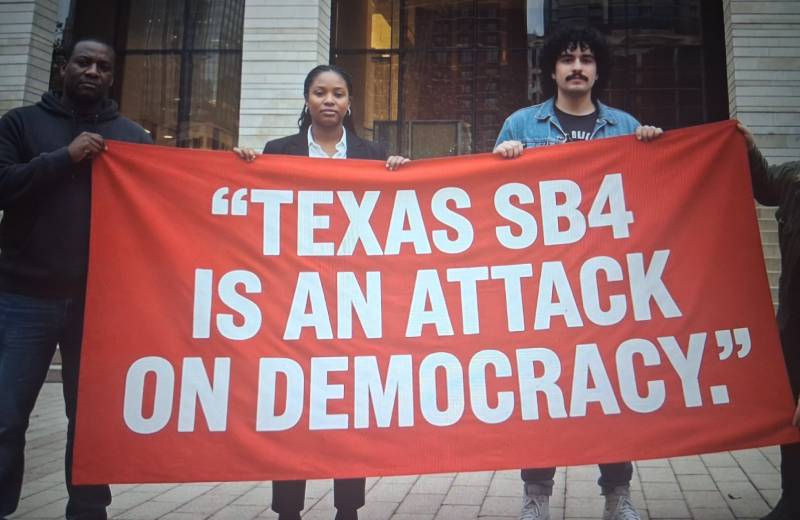

In a first of its kind decision in favor of the Lone Star State on April 24, 2026, the Fifth Circuit Court of Appeals ruled in a divided 10-7 en banc decision to overturn an injunction blocking Texas SB4 law( Senate Bill 4). A partial Fifth Circuit panel previously held that SB4 is unconstitutional, consistent with the trial court and every other federal court to hear a challenge of this specific law.
For years, Texas Republicans vilified migrants crossing the southern border as a threat to the infrastructure of the U.S. Texas Governor Gregg Abbott alleged former president Joe Biden systematically allowed mass invasions of illegal migrants into the country, particularly through the Mexico and Texas border.
“It is precisely these kinds of threats that motivated the State of Texas,” 5th Circuit Judge James Ho asserted, to enact SB 4, particularly given that among the “more than 6 million illegal immigrants from more than 100 countries” who crossed the Southwest border under Biden were “hundreds of individuals on the terrorist watchlist” and “nearly 2,000 gang affiliates.”
The ACLU of Texas and the Texas Civil Rights Project filed the lawsuit in 2023 – on behalf of the Las Americas Immigrant Advocacy Center, American Gateways, and El Paso County. The lawsuit argues that Senate Bill 4 (SB4) violates the Supremacy Clause of the U.S. Constitution and is preempted by federal immigration law. This legal challenge contends that SB4 conflicts with federal authority over immigration matters, raising significant constitutional concerns about state versus federal powers in this area.
On the flip side, last month all the 5th Circuit Justices reached a different conclusion on procedural grounds alone by reversing the lower court injunction instead of addressing whether SB4 was unconstitutional.
The 5th Circuit determined the plaintiffs Las Americas Immigrant Advocacy Center and American Gateway lacked standing because claims of injuries such as resource diversion to assist immigrants affected by SB4 were “voluntary expenditures” rather than direct injuries caused by the law itself. To clarify, because neither organization proved they’d been injured by the implementation of SB4, therefore both groups lacked standing to bring legal claims opposing its existence into the law books of Texas.
ACLU File New Lawsuit to Block SB4
To stay in the fight for justice, another quick round of a voluminous lawsuit was filed on May 4, 2026, by the Texas Civil Rights and the ACLU of Texas seeking to block four distinct parts of Senate Bill 4. The law is set to take full effect on May 15. Following the 5th Circuit court ruling last month, legal battles continue to rage over whether key provisions can be enforced.
“Immigration is up to the federal government, not the states. That’s exactly what the district court in our original case said,” insisted Caro Rivera Nelson, an attorney for ACLU of Texas.
“We are taking this back to court to defend our Texas communities,” stated ACLU Legal Director of Texas Adriana Pinon.
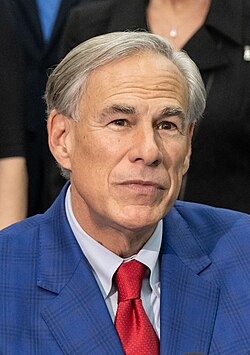
Texas Governor Greg Abbott, according to a news outlet at The Center Square, reaffirms the position he held several years ago as to why SB4 was necessary. Former President Joe Biden’s “deliberate inaction … left Texas to fend for itself.” Abbott also maintains that Article 1 Section 10 of the U.S. Constitution empowers states “to take action to defend themselves and that is exactly what Texas is doing.”
Abbott’s press secretary, Andrew Mahaleris, told The Center Square, “Governor Abbott signed SB4 into law to protect Texas and America from President Biden’s open border policies, the effects of which did not disappear overnight. Texas will not back down from its constitutional right to self-defense.”
Was Texas War Against Migrants’ Invasion Deciding Factor in 5th Circuit Decision
As relatively straightforward as the majority’s opinion was, Judge James Ho’s concurrence deviated to hit hard.
A possible Supreme Court selection by President Trump, Judge James Ho – piggybacked onto the state’s arguments about its “power to engage in war in response to an invasion” as a separate ground for not considering the plaintiffs’ claims.
In a February 2024 order granting a preliminary injunction, Judge David Alan Ezra for the Western District of Texas concluded that “surges in immigration do not constitute an ‘invasion'” and denied that Texas was “engaging in war by enforcing SB 4.”
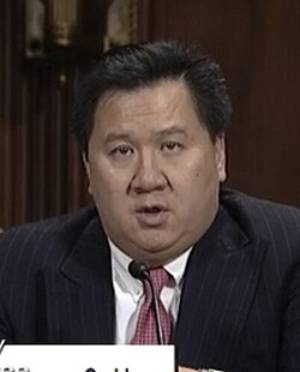
In a clapback, Judge Ho unloaded a razor sharp rebuke on the matter.
He noted that “Nations have long weaponized migration to harm other nations,” and that concerns about such weaponization “date back to our Nation’s Founding” but have become more extensive and organized in recent years, with the United States becoming “one of the most popular targets of” such threats.
“Not surprisingly,” Ho continued, “Presidential Administrations of both parties have recognized that weaponized migration presents a serious threat to the security of the United States.”
SB4 Is a State Crime in Texas
Texas SB4, passed by the Texas Legislature in 2023, makes it a state crime for anyone to enter Texas from Mexico without authorization. SB4 also allows local police and state police to arrest people based on immigration status and state and local magistrates in Texas can deport a migrant without federal intervention.
The Fifth Circuit’s mandate does not begin until May 15, and at least until then the preliminary injunction against SB4 remains in effect.
Previous Court Decisions
In January 2024, the (DOJ)Department of Justice under former president Biden sued Texas before the SB4 law took effect.
Senate Bill 4 was set to go into effect on March 5, 2024, but the DOJ lawsuit blocked it by a district court order on February 29, 2024, according to the ACLU. At the time, theFifth Circuit Court of Appeals declined Texas’s request to reimpose the law while litigation proceeds. Two months later on March 19, 2024, the Supreme Court concluded the law should effectuate while the Fifth Circuit contemplated the decision to sort out unresolved issues.
When Donald Trump took over the White House in January 2025, the DOJ dropped Biden’s lawsuit two months later to eliminate SB4 altogether based on constitutional violations.
In June 2025, Texas SB4 got smacked down again when the Fifth Circuit upheld the district court’s preliminary injunction, finding that Senate Bill 4 is likely preempted by federal law and unconstitutional. Enforcement of the law remains blocked while undergoing further litigation. Meanwhile, Texas authorities sought federal help for assistance.
What is groundbreaking in itself is the fact that the SB4 law authorizes state law enforcement officers, sheriff deputies and Texas Rangers to deport foreigners from Texas jurisdiction, those who illegally entered the U.S. the first time by coming through the Texas border and re-entered the border the second time. By executing the deportation process in this
manner it’d give police a grand display of power, power the Texas government never had since the inception of federal law.
While the ruling of the lower court aligned with every other review by federal court authorities that SB4 was unconstitutional, as mentioned earlier, the full Fifth Circuit reached a different outcome. This time, the decision wasn’t based on the merits of the law itself despite the constitutional challenges against SB4. SB4 was dismissed due to procedural issues, leaving the law’s fate uncertain and underscoring the complex legal landscape surrounding immigration policy in Texas.
SB4 Consequences for Aliens
After the devastating Fifth Circuit ruling last month, the critics argued the enforcement of SB4 will cause immediate and serious harm; racial profiling of Black and Brown Texans, family separation, and the criminalization of people who have lived and worked in Texas for years. Texas judges would be required to order deportations regardless of whether a person is eligible to seek asylum or other humanitarian protections under federal law.
“No state should have the ability to create and enforce its own immigration laws.” “Texas Senate Bill 4 upends constitutional precedent, tears apart our democracy, and oppresses Texans through racial profiling. It is unacceptable that in a majority-minority state, our elected officials continue to legislatively target our communities. As a border state, as Texans, and as humans, we should be leading with dignity and due process for all communities,” said Rochelle Garza, president of the Texas Civil Rights Project.
“This ruling is a procedural decision, not a ruling on the merits,” said Cody Wofsy, deputy director of the ACLU’s Immigrants’ Rights Project. “It does not change what every court to examine similar laws has found: SB4 is unconstitutional. This fight is far from over.”
Senior ACLU staff attorney weighed in on the controversial legal saga.
“This decision leaves the door open to exactly the kind of state overreach SB4 represents,” said David Donatti, senior staff attorney for the ACLU of Texas. “If it goes into effect, communities and families across Texas will face surveillance, suspicion, and the constant threat that any encounter with law enforcement could upend their lives.”
The ACLU and Texas Civil Rights Project hope the new lawsuit they filed will stop Texas SB4 from taking effect later this month.
The new lawsuit filed by the ACLU this month happened almost simultaneously as Texas DPS is implementing Texas Governor Greg Abbott’s border security plan called (OLS) Operation Lone Star 2.0. Since Abbott launched OLS five years ago, from March 2021 through February 2026, OLS officers have apprehended:
- 538,141 illegal foreign nationals, including those referred to Border Patrol.
- They also deterred 157,112 illegal entries, according to OLS data obtained by The Center Square.
- OLS officers have made 63,659 criminal arrests and 12,392 criminal trespass arrests. These include arrests of U.S. citizens and illegal border crossers.
- Human smuggling arrests total 10,552 with 23,717 human smuggling charges reported, according to the data.
- Total felony charges were 51,091 with 11,950 federal or other charges, with some arrests involving multiple felony charges, according to the data.
“OLS is more critical now than ever because we face more threats than we’ve ever faced before, especially from special Interest aliens and suspected terrorists who are still coming across the border,” DPS Lt. Chris Olivarez told The Center Square. DPS troopers are arresting illegal foreign nationals with potential ties to terrorism, including aliens from Afghanistan, Egypt, the Congo, Mali, Pakistan, Syria, Turkey, Iran and other countries, The Center Square reported.

SB4 Adds New Chapter of Texas Crimes
SB 4 added Chapter 51 to the Texas Penal Code, titled Illegal Entry Into Texas State, and a new Chapter 5B in the Code of Criminal Procedure. Now there are three new offenses migrants will face:
Texas Penal Code Section 51.02 – Entry From Foreign Not Admitted
An alien commits the offense of illegal entry into Texas if he or she enters or attempts to enter Texas directly from a foreign nation at any place other than a lawful port of entry. The base offense is a Class B misdemeanor (up to 180 days of county imprisonment; fine up to $2,000). A second conviction is bumped up to a state jail felony.
Texas Penal Code Section 51.03 Illegal Reentry From Overseas by Migrant(s)
Applies to a person who was previously denied admission, excluded, deported, or removed who enters or seeks to enter or is located in Texas. The base offense is a Class A misdemeanor, but there are serious enhancements:
Class A Misdemeanor: up to 1 year in prison and a fine of up to $4,000.
- Third-degree felony (2-10 years) – if the prior removal was based on two or more narcotics or crimes against persons offenses, or if the defendant was expelled for national-security reasons.
- Second Degree Felony (2-20 years) – if the previous removal was subsequent to a felony conviction.
Texas Penal Code §51.04 – Refusal to Comply With Order to Return to Foreign State
Texas lawmakers stiffened the punishment for aliens failing to comply with §51.03 or §51.04. Failure to do so, the individual will face 2-20 years in prison (second-degree felony) for refusal to comply with an order to vacate from premises by a magistrate or judge under CCP Article 5B.002.
Importantly, the offense is to the order itself, not to the underlying immigration status. Under the plain text of the statute, a defendant who later turns out to have been a U.S. citizen, or who could not physically comply, is nonetheless subject to it.
Even worse, there is no probation, no parole, no required home-detention or electronic monitoring. The Chapter 42A amendments eliminated community supervision for Chapter 51 offenses in 2025. SB 4 also specifically prohibits parole and mandatory monitoring. A conviction under §51.03 or §51.04 requires a migrant to serve the full sentence which, in essence, means if a judge hands down 10 years in prison to a migrant the person must serve the full 10 years!
5th Circuit Flesh Out Differences Involving Prior Supreme Court Decision
“This case concerns whether the State of Texas, exercising its historic, sovereign police powers, can legislatively protect its citizens from a surge of illegal aliens in response to an unprecedented border crisis and a declared invasion,” U.S. Circuit Judge Jerry Smith, a Ronald Reagan appointee, wrote in the majority opinion. “Because the plaintiffs that are challenging the new statute lack standing, we vacate the preliminary injunction without addressing the merits of the preemption claim.”
Both Las Americas and American Gateways presented dual arguments indicating they have standing because SB4 would force them to spend more resources defending clients facing deportation under the new state system. Smith rejected this argument, citing the Supreme Court’s 2024 ruling in FDA v. Alliance for Hippocratic Medicine.
In the FDA case the court held an anti-abortion group lacked standing to challenge the FDA’s approval of mifepristone, rejecting its argument that it was harmed by having to devote resources to opposing the agency’s actions. The court said, “an organization that has not suffered a concrete injury caused by a defendant’s action cannot spend its way into standing simply by expending money to gather information and advocate against the defendant’s action.”
“If [the] nonprofit plaintiffs were to have standing,” Smith further wrote in the Fifth Circuit’s ruling, “any enterprising legal-advocacy organization could repackage a generalized grievance as an ‘injury’ to its ‘core business activities’ and manufacture Article III standing every time a new law or regulation goes into effect.”
In dissent, U.S. Circuit Judge Priscilla Richman, a George W. Bush appointee, wrote that at least one plaintiff – Las Americas – has standing because “it has shown that state immigration laws ‘directly affect and interfere with [Las Americas]’s core business activities.'”
Richman pointed to how the Supreme Court differentiated its Alliance ruling from a 1982 case in which the civil rights organization Housing Opportunities Made Equal was found to have standing to sue an apartment complex owner who falsely told a Black “tester” employed by the organization that no apartments were available.
U.S. Supreme Court Justice Brett Kavanaugh, a Donald Trump appointee, wrote in the Alliance ruling that since “HOME not only was an issue-advocacy organization, but also operated a housing counseling service,” it had standing to sue because the apartment complex owner’s misrepresentation “directly affected and interfered with HOME’s core business activities.”

“The case before us is analogous,” Richman wrote in her dissent. “Las Americas is not only an issue-advocacy organization-it operates to provide legal services and legal counseling to low-income immigrants.”
Richman argued that since Las Americas has standing, the preliminary injunction should remain in place, as SB4 is likely preempted by federal law.
“We do not write on a clean slate. There is a Supreme Court precedent spanning nearly 150 years suggesting that the power to control the entry and removal of aliens is ‘vested solely in the federal government, rather than the states,'” Richman wrote.
News Media Contributor Clarence Walker is the editor of HoustonNewsToday.com, and he works in the legal field as a paralegal assistance and licensed state defense investigator. He began his writing career by researching documented information to write feature stories for several newspapers and magazines including the Houston Chronicle, 1-800-Politics.com, The Fix, Substack, Drug War Chronicle, Yahoo News, Forbes online, Chicot County Spectator, NewsBreak, & Alternet News. Walker also writes general assignment feature stories for NewsBlaze.com where he writes political and criminal justice articles. KPFT Radio Host in Houston featured Walker as a guest to discuss local, national and International drug trafficking, criminal justice politics, the law and drug policies.