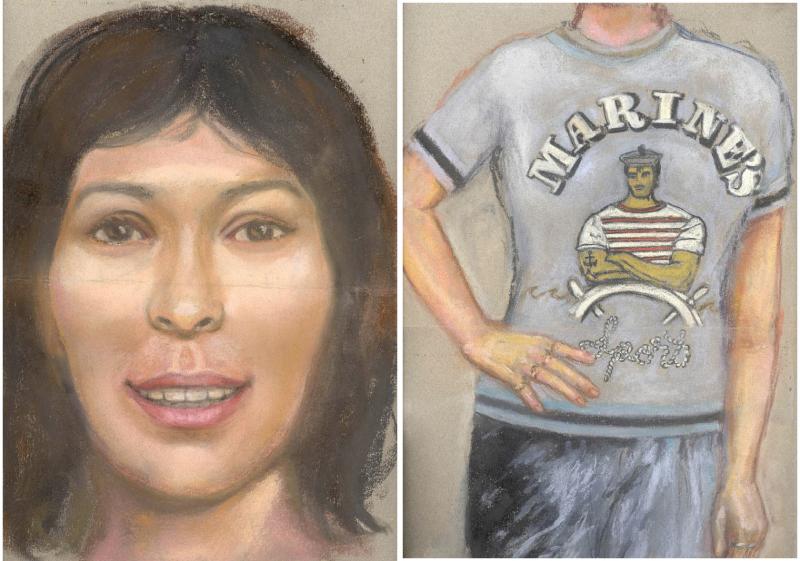

For 36 years, one of Houston’s most mysterious Jane Doe cases has remained unresolved: the identity of a female victim whose name still eludes investigators. Despite advances in forensic science, the identity of the young lady remains unknown, casting a long shadow over the case. In 2008, a suspect was charged in connection with this mystery, but surprisingly, he proudly beat the rap while already serving life in prison for killing another woman.
The Jane Doe case highlights the complexities and frustrations often faced in cold cases where justice drags slowly and satisifying answers remains out of reach. As the story continues to pique the interest of Houston’s true crime community it serves as a stark reminder that even decades-old crimes can stir a strong desire for closure and justice.
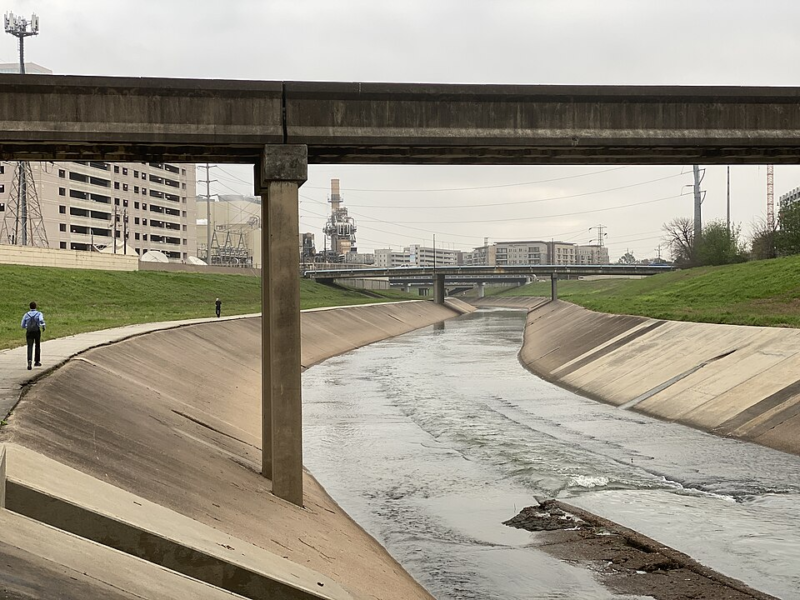
It all unfolded on October 18, 1990, when the body of a young woman surfaced in Brays Bayou in Houston, Texas. According to the Harris County Medical Examiner’s Office, the victim suffered two cuts and blunt force trauma to the back of her head. Now in 2026, over three decades later, the victim’s name remains unknown. Her killer-or killers-are unknown except in 2008; eight years later, the identity of a suspect was revealed-yet the identity of the suspect only mystified and deepened the entire investigation, which hampered the force of the criminal justice system in Harris County, Texas.
Children love to hang out around water. One day they were riding their bicycles, playing and jiving near the 9600 Block of Beechnut when they stumbled upon a deceased female in the drainage ditch. The Medical Examiner Officials described the victim as a possible Hispanic woman, 18 to 22 years old, approximately 5 feet tall, with long black hair. Medical Examiner described the victim’s clothing as a distinctive gray T-shirt with the words “Marine Sport” emblazoned on the front and that she’d worn black pants. Based on questioning of people residing in the neighborhood investigators soon learned the woman may have lived in the area.
Investigators were baffled: What was the true identity of a victim who had a mother, a father, perhaps siblings, and other loved ones?
Since the body floated for a long period of time in the Brays Bayou waterway, the water exposure may have compromised forensic evidence at the time. DNA testing was in its beginning stage in 1990. Still, the autopsy completed on the body established the victim was murdered by the hands of another.
Think about it: No known family came forward; no confirmed last sightings.
Despite media coverage at the time, not a single soul stepped forward to claim the woman. Not many phone calls either. Investigators couldn’t quite figure it out. That eerie silence was as haunting as the crime itself.
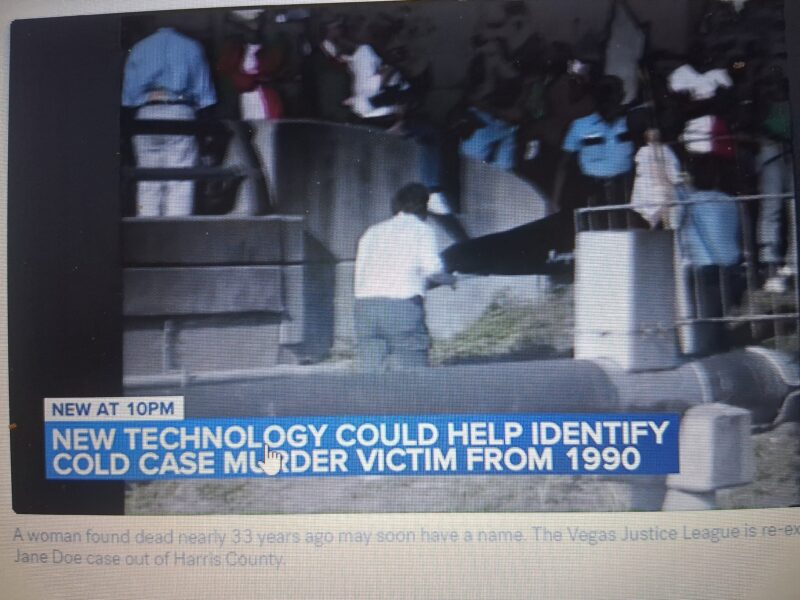
According to a Channel 13 TV News segment in 2023, a composite sketch and drawings of the victim’s clothings were released to the public, yet still no leads developed to identify the woman.
A Las Vegas nonprofit, in collaboration with a DNA lab in Houston in The Woodlands area called Othram. Othram has created a program to help solve “Jane and John Doe” cases, including the Jane Doe recovered from Brays Bayou in Harris County in Houston. Major funding gives hope to identify the Jane and John Does all over America.
“I couldn’t imagine going on 30 years and not knowing what happened to a loved one,” Justin Woo, Vegas Justice League co-founder, said.
“They’re going through these cases at a phenomenal speed now,” Lydia Ansel, also a co-founder, added, Channel 13 reported.
According to Woo, the foundation received approximately $500,000 to assist in identifying Jane and John Doe cases in Texas, California, and Nevada under a program known as “Road to Justice.” As mentioned, Road to Justice is collaborating with Othram, a lab that creates genealogical profiles using one of the most robust DNA sequences available to produce fresh leads in cases already closed.
Othram History
Othram revolutionized how forensic cases are solved, justice is served, and families are mended. Local, state, and federal law enforcement agencies across the U.S. and international agencies like the Australian Federal Police(AFP) have partnered with Othram to break through previously impenetrable forensic DNA barriers and closed previous unsolvabe cases no matter if the case involves unidentified homicide victims, missing persons, skeletal remains, and old unidentied fingerprints, according to Othram website.
The Road to Justice initiative has so far identified over 1500 cases between 2023 and 2025, with some reports indicating the program contributed to the identification of several thousand missing persons and violent offenders. Othram is currently working on 525 additional cases of unidentified children as part of a specialized project.
Strange Twist: Suspect Identified in Jane Doe’s Death
Houston Police Sgt. John Swaim, who was assigned to the city’s elite Homicide Division interviewed Lucretia Green in 1998. She had a story to tell, a story investigators initially thought would finally solve the identity of the girl found in Brays Bayou in 1990.
Green told Swaim that her boyfriend Keith McGowen confided in secret that he helped security guard Terrence Tyrone Johnson to dispose of the victim’s body. Answering pinpointed questions, the woman said her boyfriend said he visited Terrence Johnson’s apartment when he saw the dead woman, who appeared to be Hispanic, and that she’d been cut or hit with an object. Although Johnson had resided in Houston, his home state was in Michigan.
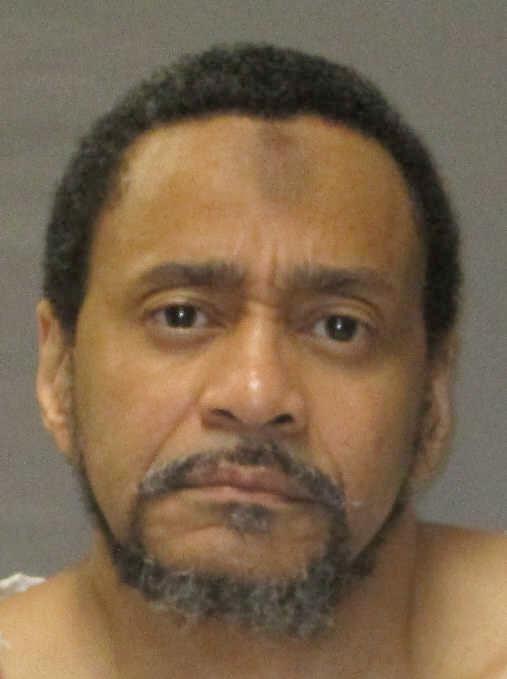
Sgt. Swaim also uncovered through questioning the witness Lucretia Green that when McGowen entered the apartment it appeared there’d been a struggle. Terrence Johnson had been a security guard at an apartment complex near Beechnut and Corporate Drive. Investigators tracked Johnson’s whereabouts to a Texas prison unit. Johnson was serving life in prison for the murder of another woman identified as Joy Whiteside. Johnson allegedly said in a letter sent to police that he did not commit the murder, but he’d helped Keith McGowen dispose of the Jane Doe body in the Brays Bayou. This is the same story McGowen gave to his girlfriend Lucretia Green, indicating McGowen(himself) only helped Johnson get rid of the body.
The motive was unclear. Lucretia Green said McGowen told her the woman was killed because she refused to have sex with Johnson. Either McGowen or Johnson is lying about what happened. Terrence Johnson got hooked with the murder, although the victim hadn’t been identified back then, and even now the woman remains unidentified. Johnson expressed outrage that Homicide Officers charged him with the murder of a woman that he knew nothing about.
A Murder Charge Does Not Require the Victim’s Identity in Texas
Although Jane Doe hadn’t been identified, still the prosecution could proceed depending upon the evidence and the circumstances surrounding the victim’s death. Under Texas Penal Code §19.02, a murder charge hinges on three key elements: proving a person is dead, showing the death resulted from criminal conduct, and establishing that the defendant intentionally or knowingly caused the death (or during certain felonies).
Interestingly, Texas Courts has consistently ruled that as long as prosecutors prove a human being was unlawfully killed, the case can move forward even if the victim remains unidentified.
To meet this standard, prosecutors often rely on autopsy findings confirming the homicide, forensic analysis of remains, evidence tying the suspect to the death or body disposal, and sometimes even statements or confessions from the accused or credible witnesses.
This approach ensures justice can be pursued even in challenging cases where the victim’s identity is unknown, emphasizing the crime over the victim’s personal details.
Terrence Johnson First Murder
Homicide investigators felt convinced Terrence Johnson was the person responsible for the homicidal death of Jane Doe found in Brays Bayou in October 1990.
It made sense because Johnson had brutally murdered another woman identified as Joy Denise White on Christmas Eve, December 24, 1991.
Both Johnson, then 22-years old, and Whiteside, 28, were employed as security guards by Security Sure Company. Whiteside’s murder happened at the Flea Market located at 6118 Southwest Freeway near Westpark.
Whiteside had been on the job approximately two weeks when her husband, around 6:20 AM, discovered her on the floor of the guard shack, shot six times. Whiteside’s husband, with whom she sired two children, told police he decided to check on Whiteside after she failed to make a wake-up call to him. Alarmed, Whiteside’s husband hurried to the job to check on her.

Sgt. Wayne Wendel told reporters the crime scene evidence proved Joy Whiteside struggled with her attacker and that her clothes had been pulled down below her waist, which suggested to Wendel, the killer may have tried to sexually assault Whiteside. As bizarre as this sounds, less than 24 hours later, after the victim was found, Terrence Johnson “bragged” to another security guard, explaining how he murdered Whiteside. Johnson had been off duty the night he killed the woman. Apparently, Johnson stopped by the security post near Westpark to chit-chat with Whiteside.
No evidence proved what really triggered the off-duty security guard to execute the woman, his co-worker. Was it sexual motivations or did Joy Whiteside owe Johnson money as he proclaimed to another guard. Was Johnson a lust murderer? A possible serial killer learining how to kill people.
Investigators further linked Johnson to Whiteside’s murder when they discovered Whiteside’s 38-caliber pistol, the alleged murder weapon, inside Johnson’s apartment at 9501 Beechnut Street. Johnson’s co-worker, the same person he confided in about Whiteside’s death, further told homicide investigators that Johnson stated he wanted to keep the gun belonging to Whiteside in case he wanted to do it again, Sgt. Wendel told a Houston Chronicle reporter. By keeping the dead woman’s gun in his possession showed Johnson possessed no cleverness.
Charged with first-degree murder in the 209th Harris County Criminal District Court; Judge Michael McSpadden set Terrence Johnson bond at $500,000.00. A relative hired one of Texas most prominent defense attorneys named Dick DeGuerin. Prosecutors felt they had a slam-dunk case. For example, Johnson boasted about the murder to another security guard, and the police recovered the weapon owned by the decedent inside Johnson’s apartment.
Prosecutors were stunned to realize that an hourly wage security guard like Johnson had enough money to hire DeGuerin. DeGuerin fees for a murder case ranged in the hundreds of thousands of dollars. To add to the prosecutor’s surprise, Johnson was released from jail on a $500,000 bond!
Eventually, a judge revoked Johnson’s bond and had him rearrested and put back into jail for violation of bail bond conditions. The evidence against Johnson stacked higher and higher until his attorney convinced him to take a plea deal. On August 3, 1993, Johnson pled guilty before the 209th District Judge and was sentenced to life in the Texas Department of Corrections for Joy Whiteside’s murder.
Murder Victim Jane Doe Found in Brays Bayou: Cold Case Reopened
Following the information provided to homicide investigators by Lucretia Green, the Jane Doe murder case officially reopened. A thorough analysis of the case presented terrible challenges for the homicide police and the prosecution team. They only had the word of Lucretia Green. Green told police her boyfriend Keith McGowen explained to her step-by-step that he only helped Terrence Johnson to throw the unknown victim in Brays Bayou. And that Johnson killed the victim over a dispute about the woman’s refusal to have sex with Johnson. Homicide investigators noticed the similarities between the murder of Joy White, a murder Johnson committed in 1991–and the murder of the unknown Jane Doe found murdered in Brays Bayou in 1990. Both incidents appears to involve Johnson’s urge to have sex with the victims.
No information had been mentioned in the court records if police questioned Keith McGowen to corroborate the story that Lucretia Green told them that McGowen helped Johnson to hide the body in the waterways. On July 8, 2008, under Harris County Case# 1173964, HPD Sgt. Paul Motard filed a second murder charge against Johnson in Jane Doe’s case while Johnson was already serving life in prison for killing Joy Whiteside in December 1991. A transport van transferred Johnson from his prison unit back to Harris County Jail in Houston. He pleaded not guilty before Judge Denise Collins in the 208th District Court. Collins appointed defense attorney Jules Laird to represent the accused killer.
Finally, the police hooked Terrence Johnson with the second murder of Jane Doe. Johnson expressed outrage that Homicide Officers charged him with the murder of a woman that he claimed he knew nothing about.
From all appearances, prosecutor Marie Primm, assigned to try the Jane Doe murder against Terrence Johnson initially thought she could get a conviction. But the deck was stacked against her. The first important challenge was the fact that the Jane Doe victim hadn’t been identified-although under Texas law the prosecution could still take place without the identification. On February 12, 2010, prosecutor Primm dismissed the murder rap of Jane Doe that’d been filed against Johnson, citing a missing witness.
Who was the missing witness? What happened? An examination by HoustonNewsToday of the documented court records pertaining to details of the murder case file revealed no clear-cut answers.
No Solid Corroborating Evidence to Prove Whether Terrence Johnson or Keith McGowen Killed Jane Doe
Sylvia Escobedo is a former Harris County Assistant District Attorney. During her tenure at the District Attorney Office, she promoted to chief courtroom prosecutor, where she prosecuted countless criminal cases, including murder and capital murder. Now a criminal defense attorney, Escobedo represents criminal defendants and provides legal commentary for Fox 26 TV News and other local TV news stations. Escobedo analyzed the information in the Terrence Johnson/Jane Doe case. She told HoustonNewsToday that in regards to the strength of the case against Johnson at the time between 2008-2010 – it is surprising the Homicide Detectives filed a murder charge against Johnson based on the word of a third party identified as Keith McGowen.
“It appears what the state had when the charge was filed was nothing more than the hearsay statement of Lucretia Green regarding what Keith McGowen told her. And a letter from Terrence Johnson pointing the finger at Keith McGowen. So, just based on this, it appears they had two possible co-defendants.pointing the finger at each other.”
Escobedo clearly explained Texas law involving co-defendants/accomplice witnesses. “A conviction cannot be had based solely on the un-corroborated statement of a co-defendant.
Did Police File Charges Too Soon?
“Based on the limited information the police may have filed charges(against Johnson) too soon, without having the evidence to corroborate whether Johnson or McGowen committed the(Jane Doe) murder, Escobedo added. “There is a significant difference between probable cause to file a charge and proof beyond a reasonable doubt at trial,” the veteran trial lawyer said.
When asked about the prosecution team dismissing the murder rap against Johnson, Escobedo put it this way. “The state realized they couldn’t prove their case at trial and dismissed it.”
Charges Can be Refiled Against Johnson
When criminal charges are dismissed for lack of evidence the dismissal doesn’t block the police and prosecutors from refiling a murder charge against Terrence Johnson providing more solid evidence come to light that directly connect Johnson to Jane Doe. And if there’s elements of hard proof that he murdered the unknown lady.
“Yes, Attorney Escobedo told HoustonnewsToday, the state can refile the murder charge if additional evidence is discovered. It could be a witness, DNA, hair fiber and prints. Forensic Technology has come a very long way since 2008, so there are a number of things that could be examined and tested if police discover new evidence.”
Houston’s Coldest Unsolved Mystery
Only time will tell if the Jane Doe found in Brays Bayou in 1990–will someday be officially identified and her killer or killers brought to Texas justice. Until more evidence conclusively prove Terrence Johnson murdered the young woman 36 years ago–the law presume Johnson innocent until proven guility in a court of law. What matters more than the rights of accused criminals is that every story of an unsolved “cold case mystery” needs to be told. All lives matter.
This cold case story remains ongoing. Any new developments will be reported in a future update.
HoustonNewsToday Editor and Senior Crime Reporter C. Walker can be reached at HoustonnewsToday@yahoo.com
Terrence Johnson Inmate # 00669656 is now 57 years old. He remains behind bars serving life in prison at the Alfred Hughes Unit for the December, 1991, murder of Joy Whiteside. PO Box 660400, Dallas, Texas 75266-0400